

February 2026 Legal Update: Michigan’s Statewide Classroom Cellphone Ban
Michigan has enacted new legislation requiring public school districts to restrict student cellphone use during instructional time beginning in the 2026–27 school year.
House Bill 4141, signed by Governor Gretchen Whitmer on February 10, 2026, requires K–12 school districts to develop and implement policies prohibiting the use of smartphones, tablets, and certain electronic devices during classroom instruction. The law follows similar measures adopted in other states aimed at reducing digital distractions, improving classroom focus, and addressing concerns such as cyberbullying.
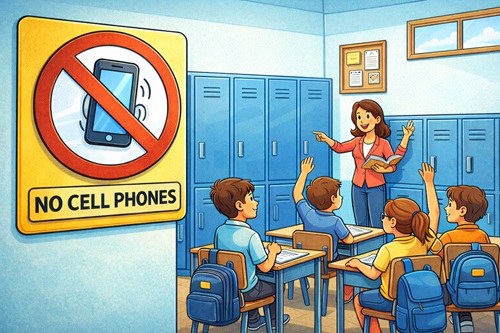
Importantly, students are still permitted to bring phones to school. Devices may remain on campus, including in lockers or stored outside the classroom, but may not be used during instructional time except in limited circumstances such as emergencies, medical needs, or teacher-approved educational purposes.
School districts must prepare and publish compliant policies prior to the start of the upcoming school year.
What This Means for Schools and Families
School administrators should begin reviewing and updating student codes of conduct, technology policies, and parent handbooks to ensure alignment with the new statewide requirement. Clear communication with families and staff will be essential to support smooth implementation.
Parents may wish to review their district’s updated policies once released to better understand expectations for the coming school year and discuss device rules with their children in advance.
Recommended Actions
As districts prepare for implementation, schools should review policy language, clearly define instructional time, outline permissible exceptions, and establish consistent enforcement procedures. Providing advance notice to families and training staff on application of the policy can help ensure a smooth transition.
Families can also take proactive steps by reviewing school policies once issued, discussing expectations with their children, and planning practical arrangements such as locker storage or after-school communication procedures.
Daudi & Kroll PC works with educational institutions and families to provide guidance on policy interpretation, compliance considerations, and related legal questions. Proactive planning can help reduce disputes and support a positive learning environment. For guidance or a consultation, call us at (734) 351-5578.
Adil Daudi, Partner at Daudi & Kroll, P.C., serves as a trusted advisor specializing in employment law and complex corporate transactions. His expertise includes structuring and negotiating buy/sell agreements, real estate transactions, corporate restructuring strategies and providing guidance on employment law compliance. Adil also provides strategic counsel on estate planning, Shariah-compliant estate solutions, and corporate formation. He can be contacted for any questions related to this article or other areas of law at [email protected] or (734) 351-5578.
Disclaimer: This article is intended to provide general information and does not constitute legal advice. Please consult with an attorney for advice regarding your specific situation.

Conduct an Internal Worker Classification Audit
Misclassifying employees as independent contractors can create significant liability under state and federal law. Conducting a proactive internal audit can help ensure workers are properly classified by reviewing factors such as control over duties, provision of tools, payment structure, the role of services in your business, and the permanency of the relationship. Updating agreements to reflect the actual working relationship and periodically reviewing classifications with legal counsel can reduce exposure to back wages, tax penalties, unemployment claims, and benefit disputes, while supporting long-term compliance.